










Could 3D-printed livers make transplant wait lists a thing of the past?
CU Boulder researchers join multi-institution team developing transplant-ready liver tissue
A multi-institution team, including scientists at the University of Colorado Boulder, MIT, Harvard and Columbia universities, is working to develop 3D-printed liver tissue made of human cells that could one day be transplanted into patients without their bodies rejecting it.
The project is supported by a new five-year, up to $25 million award with the Advanced Research Projects Agency for Health (ARPA-H) Personalized Regenerative Immunocompetent Nanotechnology Tissue (PRINT) program.
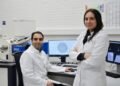
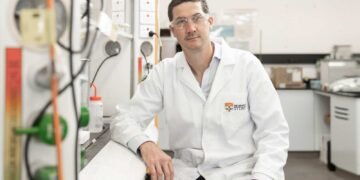
“There are many patients out there that either never get a transplant or are stuck on the waiting list for years,” said Jason Burdick, a professor of chemical and biological engineering whose lab at CU Boulder’s Bio Frontiers Institute will lead the 3D printing part of the project. “If there were an off-the-shelf alternative, once a patient needs a liver they could get a transplant almost immediately. That’s our goal.”
About 4.5 million U.S. adults have been diagnosed with liver disease, and about 52,000 die each year from liver failure. At any given time, roughly 15,000 people in the U.S. are on the transplant list, with waits ranging from 30 days to more than five years.
In 2024, ARPA-H launched the PRINT program, an ambitious, fast-track endeavour to accelerate research into bio printing of organs. The PRINT program is led by ARPA-H Program Manager Ryan Spitler, Ph.D.
In January, the agency announced the members of the ImPLANT project team –– short for Immunoshielded Printed Liver Assist NeoOrgan for Transplant. Led by Harvard University’s Wyss Institute, the project brings together the world’s leading experts in synthetic biology, transplant immunology, vascular engineering and 3D bio printing.
While the work is still in its early stages, the effort to manufacture a liver is already underway.
The process begins with induced pluripotent stem cells — adult skin or blood cells that have been modified to have the capacity to become any kind of cell. Using a technique pioneered at MIT, researchers program those cells to become liver cells. (Soon, researchers hope to be able to genetically engineer those cells to also evade immune rejection by patients, making them universally compatible.)
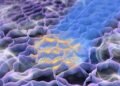
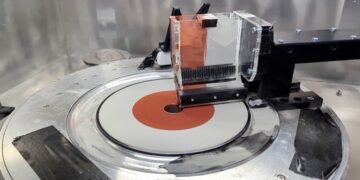
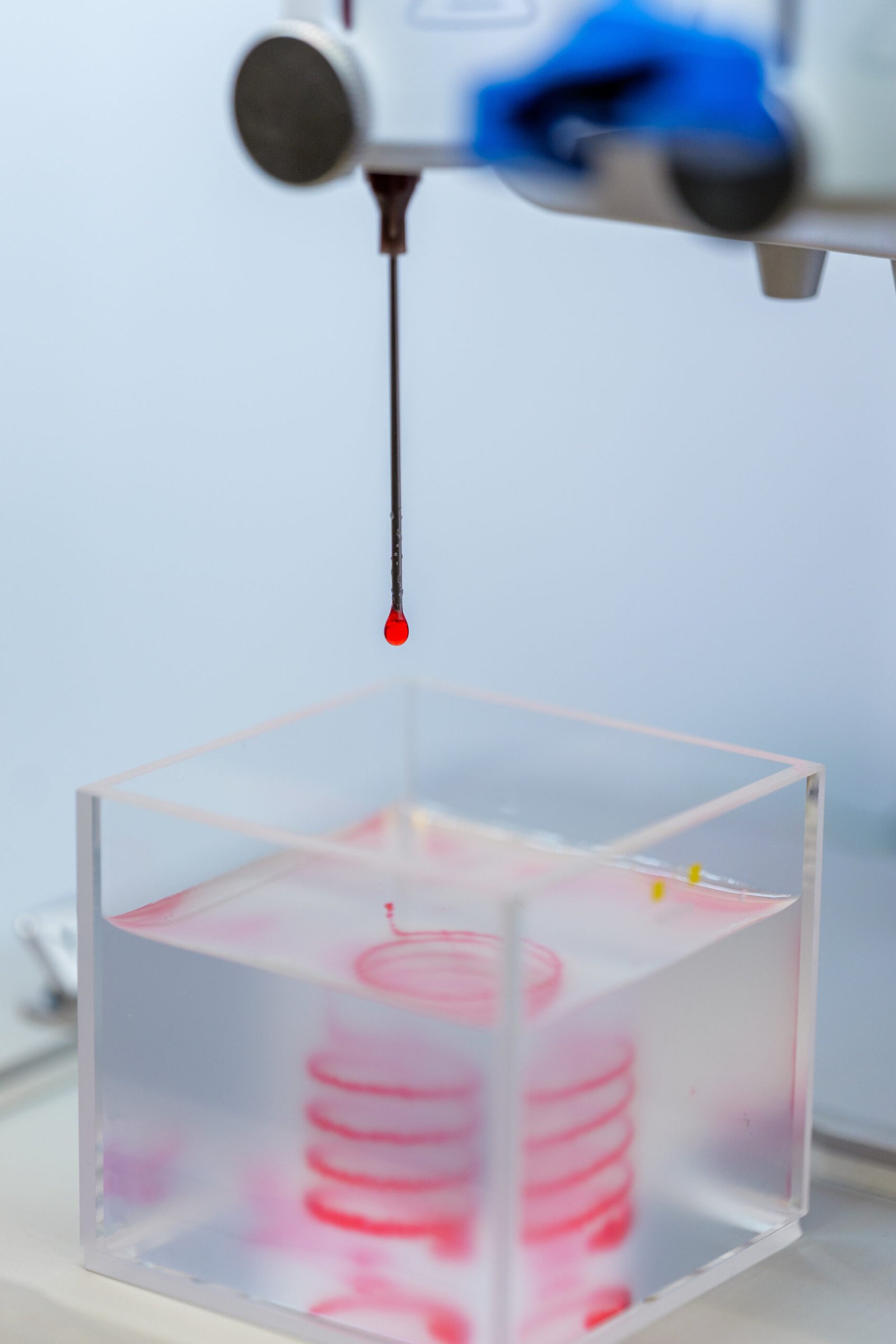
Burdick’s team takes clusters of those cells, known as liver organoids, and assembles them into larger, tissue-like structures. Using a novel 3D-printing technique called ‘suspension printing,’ pioneered in his lab, the team creates intricate webs of blood vessels deep within the tissue.
Ultimately, when a patient needs a new liver, that tissue could be ordered off the shelf, much like parts for a knee replacement are today, then implanted and sutured in place.
Of the up to $25 million allocated to the team, about $3.5 million will support work at CU Boulder.
Within a few years, the team hopes to begin animal studies.
If all goes according to plan, clinical trials could follow within five to 10 years, said Burdick.
Meanwhile, collaborators at Columbia University will focus on developing new bioreactor technologies and manufacturing processes to produce liver cells, organoids and tissues at scale.
Source: CU Boulder