















Watch biomolecules in single live cells in real time
The team was led by Prof. Wu Haichen from the Institute of Chemistry, Chinese Academy of Sciences, and Prof. Liu Lei from Xihua University. Their study was published in PNAS.
Watch biomolecules in single live cells in real time: Studying the activities of molecules inside single live cells is important for understanding differences between cells, how they change, how they age, and how diseases develop.
But most current methods use micromanipulation or take samples out, then measure them later. This makes it hard to track changes happening in real time.
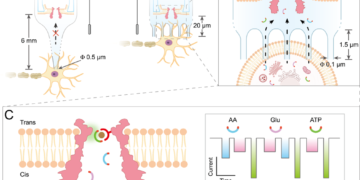
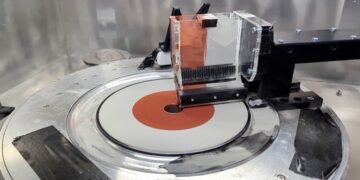
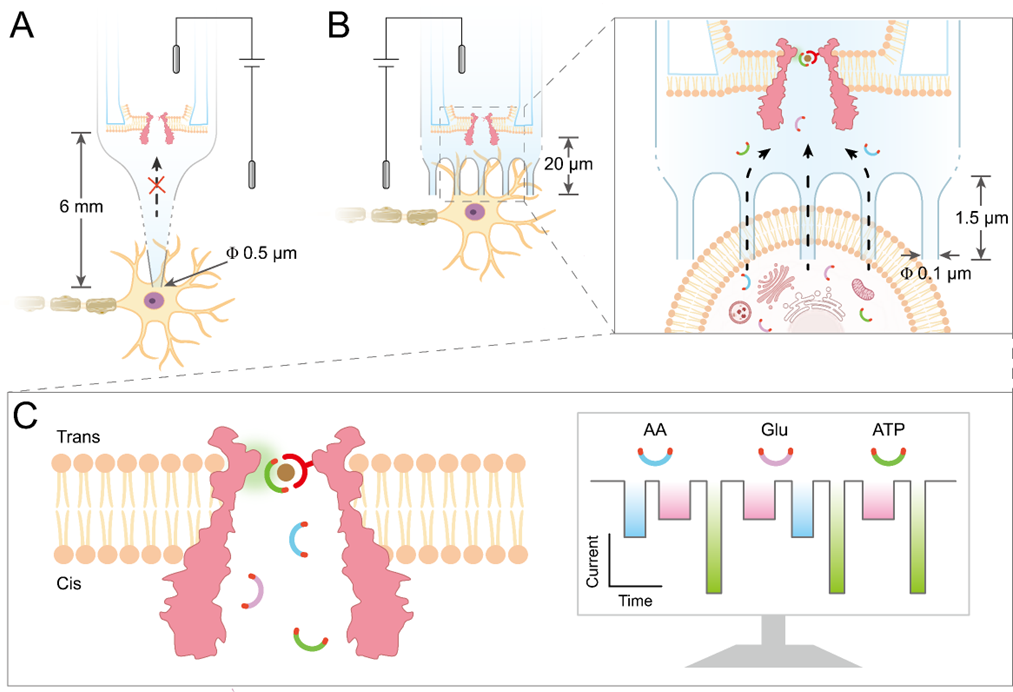
To solve this, the researchers made a device that uses an aluminum oxide nanostraw membrane and a glass nanopore membrane with a special protein called MspA-Phen-Cu.
The nanostraw helps take out molecules from inside the cell without damaging it, and the protein nanopore detects the molecules as they pass through. When molecules move through the nanostraw and into the nanopore, they create a unique electrical signal. This helps identify each molecule and measure how much is present.
The researchers tested their tool using a model of hippocampal neurons that were deprived of oxygen and glucose, which mimics brain injury from lack of blood flow.
They watched how three important molecules—glutamate, ascorbic acid, and ATP—changed over time. These molecules are linked to a condition called excitotoxic neuronal edema, which is part of brain injury.
The experiments showed that over-activation of NMDA receptors is a major factor in this condition.
This tool is better than existing methods because it causes less damage to the cell, lets you monitor things while the cell is still alive, and can check multiple molecules at the same time.
This work shows how nanopore sensing can be used inside live cells, offering a strong way to study how cells work and how diseases happen at the molecular level.
Source: Chinese Academy of Sciences.