















Discovery of next-gen materials for quantum technologies
Researchers at Clarkson University are using artificial intelligence and computational physics to discover new materials that could be used in quantum technologies, optoelectronics, and renewable energy.
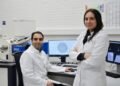
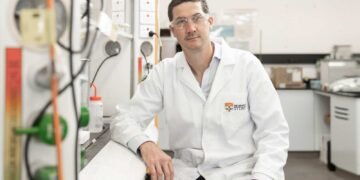
Associate Professor of Physics Dhara Trivedi worked with scientists at Los Alamos National Laboratory on a project that combined machine learning, high-throughput computational modeling, and quantum-scale simulations to find advanced materials with special electronic and quantum properties.
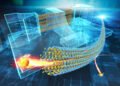
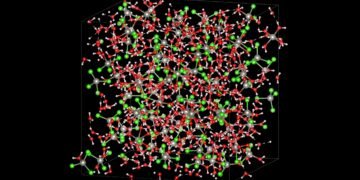
Discovery of next-gen materials for quantum technologies: The team studied two-dimensional perovskites, a type of material that could help improve technologies like solar panels, sensors, lasers, and next-generation computers.
Their findings were published in a journal called npj Computational Materials, which is part of the Nature Portfolio.
Traditionally, finding useful materials has taken years of lab testing.
But with artificial intelligence, researchers can now predict which materials are most likely to work before they even build them. “Artificial intelligence helps us find the best possibilities much faster,” Trivedi said.
“That means scientists can spend more time developing new technologies and less time searching for materials that may not work.”
The team created a database with more than 2,000 possible material combinations and trained machine learning models to predict important electronic properties.
The materials they found could lead to advances in renewable energy, quantum information science, and next-generation optoelectronic technologies.
Possible uses include more efficient solar cells, low-power electronic devices, quantum computing and communication systems, as well as photodetectors, LEDs, fiber-optic technologies, and advanced sensing platforms.
This project also shows how artificial intelligence and physics-based simulations can work together to speed up the discovery of materials for new technologies.
The collaboration between Clarkson University and Los Alamos National Laboratory also shows how universities and national research labs can team up to tackle complex scientific challenges and develop technologies that have real-world impact.
“This work shows how physics, computing, and AI can come together to help solve important problems,” Trivedi said. “The long-term goal is to create materials that can improve the technologies people use every day.”
Source: Clarkson University