
















It takes two combs to tango
Atoms and molecules are the basic parts of everything in the world.
Spectroscopy is a method used to find out what chemicals are present and how much of them there is. It does this by looking at the unique patterns of light that each chemical leaves behind.
Spectroscopy is used in many areas, including testing basic ideas about physics, studying how molecules are built, checking the environment, diagnosing medical issues, and monitoring industrial processes.
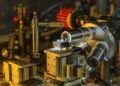
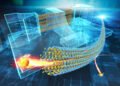
A very exciting tool in spectroscopy that has come along in recent years is the dual-comb spectrometer.
This instrument uses two special kinds of lasers that make light with very regular and evenly spaced lines. These lasers are called frequency combs.
In a recent article in *Nature Reviews Methods Primers*, Nathalie Picqué and Theodor W. Hän sch explain the ideas behind this new method, how it has developed, and what possibilities it has for the future.
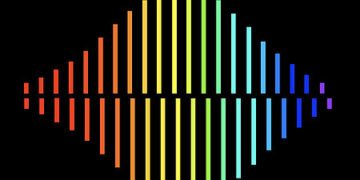
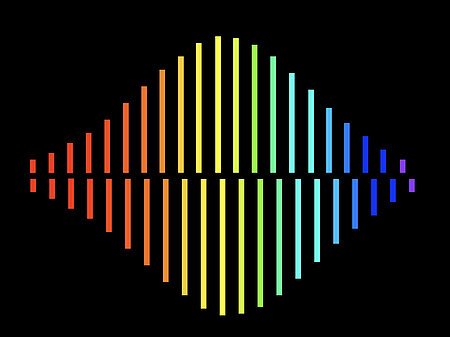
A frequency comb is a set of very sharp, carefully timed light lines that are spaced regularly.
These combs were first created using ultrafast lasers at the Max-Planck Institute of Quantum Optics in the 1990s. They changed the way scientists measure frequencies and time.
In frequency metrology, these combs act like rulers that help compare different kinds of light frequencies. They can also measure the difference between two types of light very accurately.
In recent years, frequency combs have been used for new purposes, one of which is dual-comb spectroscopy.
This method solves a problem that comes up when trying to look at a wide range of light while keeping high accuracy and detail.
It uses two frequency combs that have very similar but slightly different repeating patterns. This helps turn optical light patterns into measurements in the radio-frequency range.
The method uses time-based interference, instead of moving parts, making it fast, precise, and able to cover a broad range of light.
In the last twenty years, dual-comb spectroscopy has been used across many parts of the electromagnetic spectrum, from the terahertz to the visible light.
Scientists are now working on using it in the ultraviolet range as well.
The same article by Nathalie Picqué and Theodor W. Hän sch gives a detailed overview of the principles, recent progress, and useful applications of dual-comb spectroscopy.
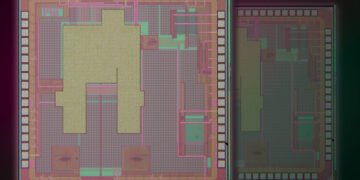
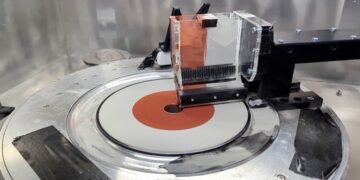
It also talks about the current challenges and what could come next. They point out that because there are no physical limits on the setup, dual-comb interferometers could lead to wide-range spectroscopy using time-based accuracy and smaller, more portable spectrometers.
Source: Max Born Institute