












A new sensor might help find bladder cancer earlier
Scientists use a catheter covered with carbon nanotubes to spot biomarkers made by cancer cells in the bladder.
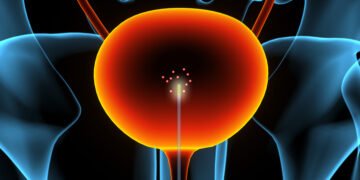
Each year, about 85,000 people in the U.S. are diagnosed with bladder cancer.
Even when treated, it often comes back. About half of patients get cancer again within five years. This makes it one of the most expensive cancers to treat.
MIT researchers have created a new way to keep track of patients, which could detect cancer coming back sooner.
Using a catheter with special nanosensors, the team found they can find very small amounts of a protein made by bladder cancer cells and see where it is in the tissue.
The researchers say this method is almost 50,000 times more sensitive than a standard urine test used to check for bladder cancer.
In an animal study, they showed that the sensors can find the tumor’s location in the bladder lining, creating a chemical picture.
Michael Strano, a professor at MIT, compares this to a camera for molecules instead of light.
“If you have a billion nanosensors in an array, you can use them to make a chemical image that helps you find the source,” he says.
Strano is the main author of the study, which was published in the journal Nature Nanotechnology.
Wonjun Yim and Hohyung Kang are the lead authors, with other contributors including several students and researchers.
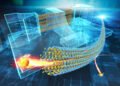
The new method uses carbon nanotubes—hollow, carbon-made tubes that glow when exposed to laser light.
Strano’s team has shown these can be made to sense different molecules by coating them with “synthetic antibodies” designed to catch specific targets.
When these targets are present, they interact with the synthetic antibodies, changing the nanotubes’ glow.
Strano’s lab has made around 24 different sensors to spot various substances, like hydrogen peroxide and viral proteins.
For this study, the researchers made a sensor to detect NMP-22, a protein already approved as a marker for bladder cancer.
NMP-22 can be found in urine, but it gets diluted, broken down, and washed away. This makes it hard to find tumors until they are more developed.
To catch cancer earlier, the MIT team wanted to place their sensors directly in the bladder, where NMP-22 is more concentrated near the tumor.
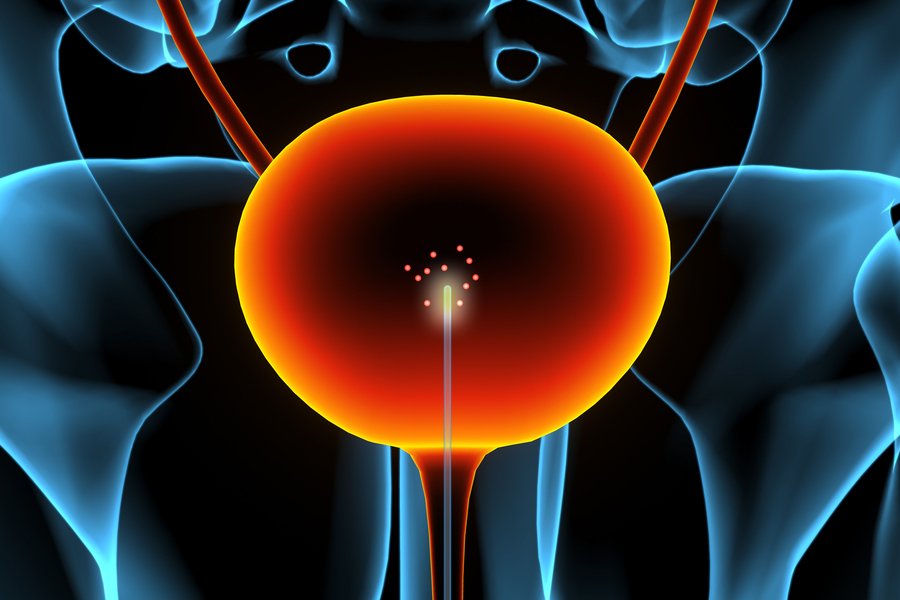
The device is a catheter with nanotubes that can sense NMP-22. The tip of the catheter also has a tiny ball lens that spins around, sending out laser light and collecting the glowing signals from the sensors.
By looking at the colors and positions of these glowing signals, the researchers can map out where the biomarkers are.
This creates not only a signal showing a marker is present but also shows where the cancer cells are.
Strano says, “When you’re looking at a tissue area, you want to know not just that there’s a signal showing a tumor, but also where it is so you can treat it or take a biopsy.
Before a tumor breaks through the bladder wall, it can still be under the surface but sending out signals we can see. When a chemical hits the catheter, we don’t just detect it—we create a map that shows exactly where it is.”
Tests on animal bladders showed this method can be 180 times more sensitive than a regular urine test.
It checks for biomarkers directly where they are made, in the bladder, instead of in the diluted urine, where their levels are much lower. This high sensitivity could help detect tumors as small as 16 square millimeters, the researchers say.
Now, the team is working on a smaller version of the imaging system so it can be used more easily in a doctor’s office.
They also plan to include their sensors in a cystoscope, which has a camera and is used to see tumors inside the bladder.
Currently, bladder cancer patients get cystoscopies yearly or even more often to watch for cancer coming back.
The new MIT method should find recurring tumors earlier, making treatment easier and reducing the cost of care, the researchers say.
Strano says, “What we’re looking for is something that can be faster and more effective.
It could be used right in a doctor’s office and make screening more efficient and less invasive, with much lower cost. The goal is to detect potential tumors much earlier.”
Daniel Heller, a professor at Weill Cornell Medicine, who wasn’t part of the research, says, “This paper is exciting because it shows how diagnostics can be more effective when the sensor is brought to the individual.”
Strano and his team showed that a type of nanosensor made from carbon nanotubes can be used to check for cancer directly at the site of the disease. This could help find cancer faster and may lead to better treatment options.
This method could also be combined with endoscopy to find other cancers or diseases, like heart or stomach issues, by changing the nanosensors on the catheter.
Yim explains, “The nice thing about polymer chemistry is that if we know the molecular structure of the biomarkers we’re looking for and how to design the binding sites, we can make new sensors for different diseases.”
He adds, “If these sensors were attached to the catheter, they might pick up biomarkers that current endoscopic tests can’t detect, which could help find many other diseases in the future.”
Source: Massachusetts Institute of Technology