



Nanotechnology is making diabetes care easier
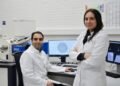
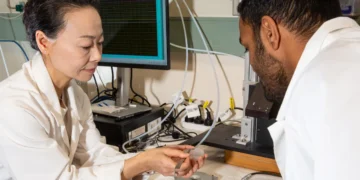
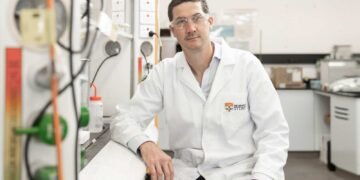
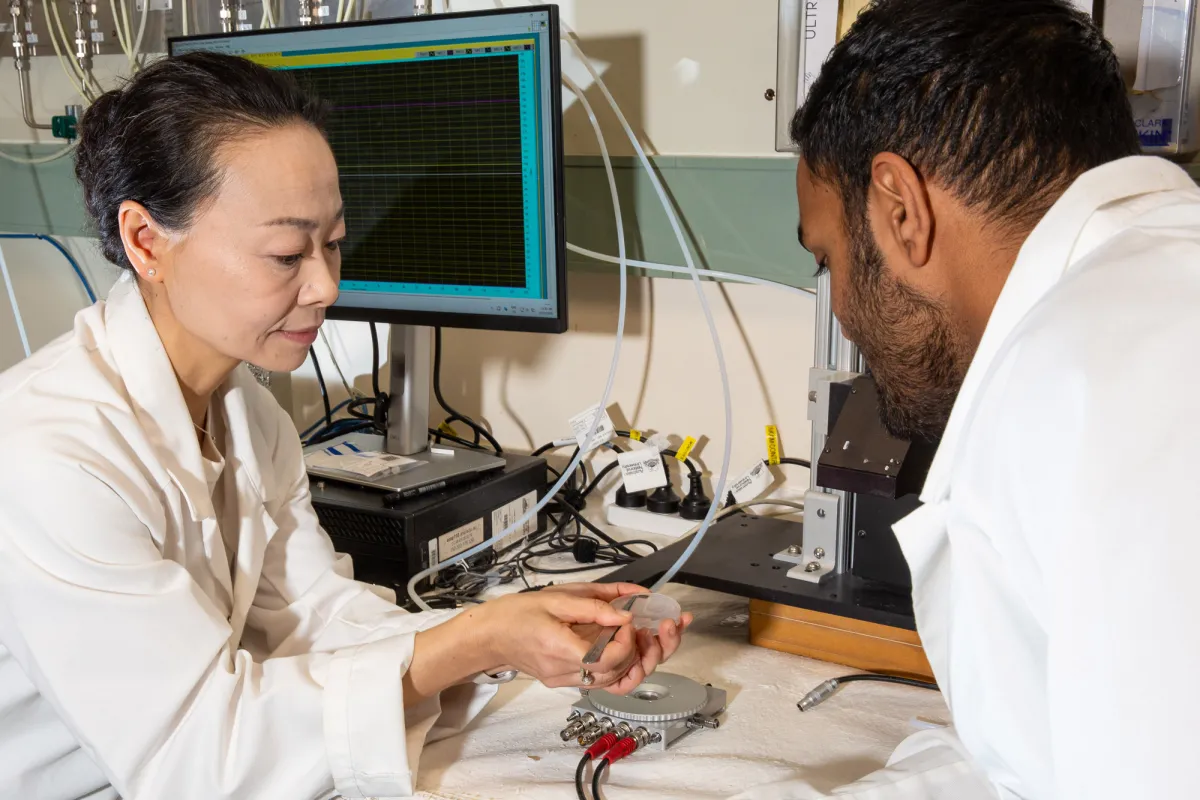
Professor Lan Fu is waiting for a call from the hospital about someone who has diabetes.
It’s not a family member or friend, but the first patient in her first pilot study using the Ketowhistle breath test.
The Ketowhistle is a new kind of device that can find signs of diabetes—and other diseases—by looking at the gases we breathe out.
Professor Fu’s work in nanotechnology, combining knowledge of quantum physics with precise fabrication techniques to create structures much smaller than a syringe tip, has brought her to this point.
“I’m interested in fundamental research, and I never thought I would change someone’s life in this way,” says Professor Fu, from the Department of Electronic Materials Engineering and the ARC Centre for Transformative MetaOptical Systems (TMOS).
“People are really passionate about this project when I talk to them—they can relate to it easily.
Everyone knows someone with diabetes,” she adds.
Diabetic ketoacidosis (DKA) is a serious complication of diabetes, where ketone molecules build up in the blood.
A part of these ketones is exhaled in our breath, making it easy to monitor the condition and provide better care than current urine tests or finger pricks.
With such a helpful product, it’s no surprise there is a lot of interest.
Solentropy is a company that specializes in medical technology commercialization.
Together with Professor Fu, they’ve started Ketone Innovation to focus on bringing the Ketowhistle to medical use.
From another angle, the company Agscent is working with Professor Fu to use this technology for monitoring cattle health.
This helps dairy farmers track the nutrition levels of their cows as they produce milk.
Solentropy, Agscent, and Canberra Health Services partnered with the Ketowhistle team to win an Ignite grant of about $500,000 from the Australian Economic Accelerator, to turn the technology into real-world applications.
“From an optoelectronics viewpoint, we understand well how to make a device that’s very sensitive to gas molecules,” Professor Fu says.
“But creating a business case is a big learning curve—do you have a market, what are the risks, how do you keep data safe, and how will it work in the real world?”
“It’s important to find out what the real world is like—it’s quite different from the ideal lab environment.
“Industry people have different perspectives; they get you to think more broadly and consider practical things, which you then bring to your research design.”
Along with industry, Professor Fu is getting medical insights from endocrinologist Professor Christopher Nolan, now with Canberra Health.
Professor Nolan has been part of the project since its start with the ANU’s Our Health In Our Hands initiative, which received Grand Challenge funding in 2017, and later won seed funding from the Australian Centre for Accelerating Diabetes Innovations in 2023.
He has helped with the device’s design, application, and also supported setting up the upcoming clinical study.
Working with industry partners has been a good experience for Professor Fu.
“They are very collaborative and helpful, and they’ve given us lots of useful advice.”
Agscent has also supported an industry partner PhD student to work on an animal health monitor.
“It’s a very important experience for students to work with reports and deadlines that industry expects,” she says.
Professor Fu says she plans to return to research once the commercialization is well underway, but she hopes some of her students will follow this path.
“Maybe one of my students will take on the journey of full commercialization and become the CEO of a company,” she says.
In fact, the commercialization process has inspired Professor Fu’s research, generating new ideas for the future.
“A lot has happened very quickly, and this focused work has helped us overcome barriers and move our technology forward quickly.”
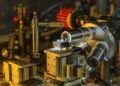
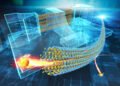
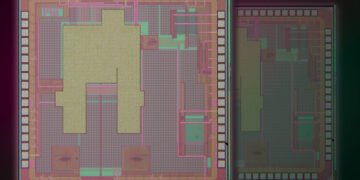
The core technology hasn’t changed—a nanowire sensor with a Schottky junction for sensitive, low-power operation—but making it work in the real world has many challenges.
Each person’s breath is a mix of molecules, including oxygen, carbon dioxide, and water vapor, all of which affect the sensor. Professor Fu hopes machine learning can help solve this.
“I never thought I would need AI, as my sensor is so sensitive.
But as I work more, I realize its limitations, and AI might help. This opens up exciting new directions for my research.”
Professor Fu encourages other researchers not to avoid commercialization, and she says she has been strongly supported by her talented team, from TMOS, the Research School of Physics, the ANU commercialization team, and the Australian National Fabrication Facility.
“The journey is certainly worth it—I would encourage anyone who thinks their work has potential to give it a try!”
Source: Australian National University