- Latest
- Trending

With the help of ultra-short laser pulses physicists at the University of Oldenburg study the ultra-fast processes occuring in nanomaterials after the absorption of light. Courtesy: University of Oldenburg. When...
Read more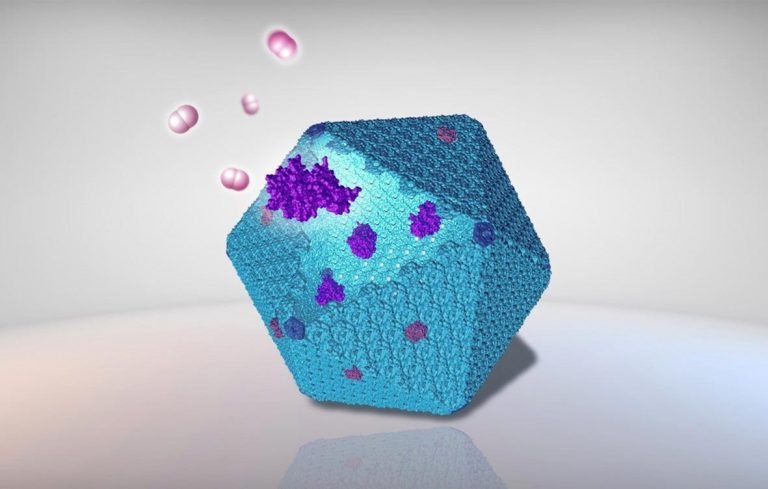
Researchers at the University of Liverpool have unlocked new possibilities for the future development of sustainable, clean bioenergy. The study, published in Nature Communications, shows how bacterial protein ‘cages’ can...
Read more
Testing for malaria could become as simple as putting on a bandage. That’s the idea behind a platform developed by Rice University engineers who introduced a microneedle patch for rapid...
Read more
A mouse fibroblast cell imaged on a metasurface made of gold nanoparticles under a total internal reflection fluorescence (TIRF) microscope exhibits enhanced and confined emission from light-emitting paxillin protein at...
Read more
After coating the object with M-spray, the researchers magnetized it with single or multiple magnetization directions, which could control how the object moved by a magnetic field. Then they applied...
Read more
The patented 'Respite' nebuliser uses high-frequency sound waves to precisely deliver drugs to the lungs. Courtesy: RMIT University. Researchers have revealed how high-frequency sound waves can be used to build...
Read more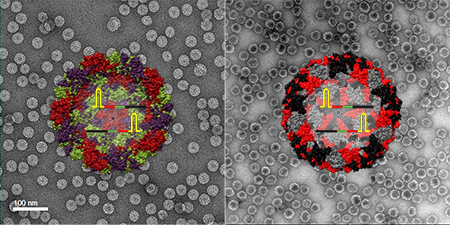
Illustration and TEM image of SARS-CoV-2 positive control made from plant virus-based nanoparticles (left) and bacteriophage nanoparticles (right). Image courtesy of Soo Khim Chan/ACS Nano Nanoengineers at the University of...
Read more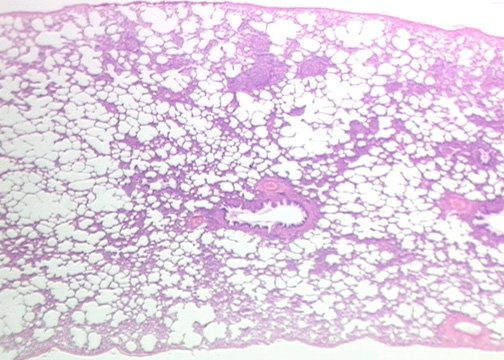
Lung tissue. Courtesy: Rutgers University Scientists used human white blood cell membranes to carry two drugs, an antibiotic and an anti-inflammatory, directly to infected lungs in mice. The nano-sized drug...
Read more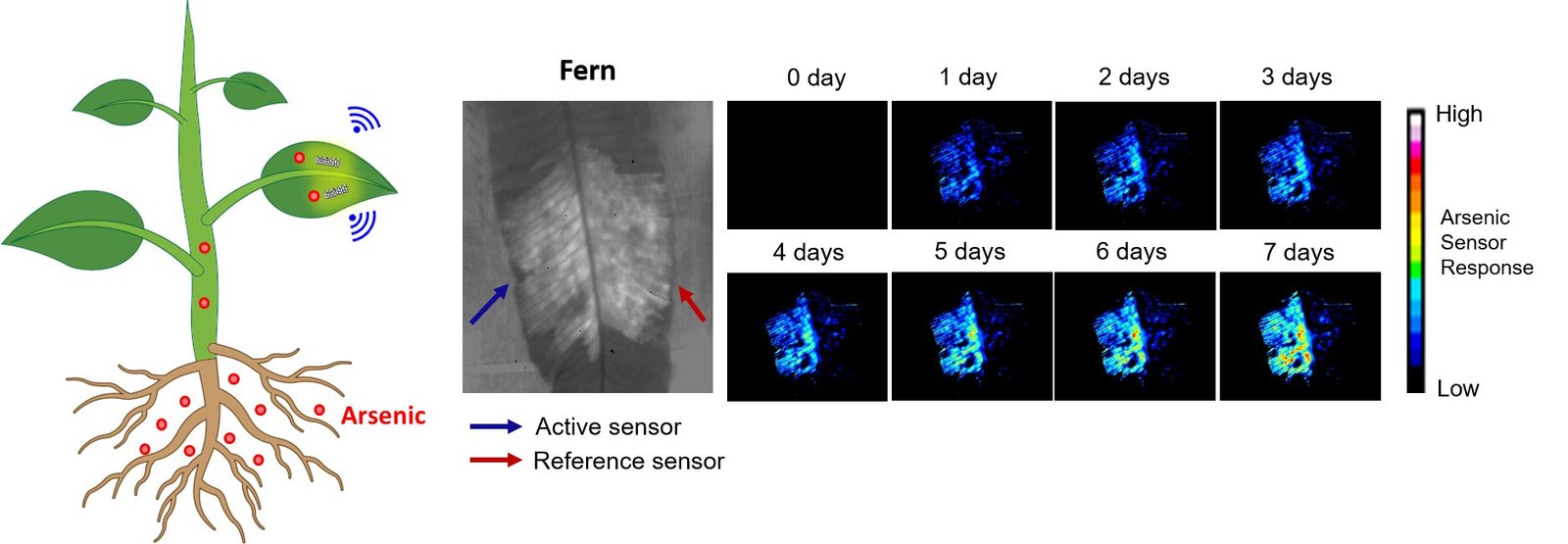
Non-destructive plant nanobionic sensor embedded within leaves to report arsenic levels within plants to portable electronics, enabling real-time monitoring of arsenic uptake in living plants. Courtesy: Dr Tedrick Thomas Salim...
Read more
The material, called Electronic Skin, mimics the natural functions of human skin in terms of strength, elasticity, and sensitivity, and can be used to collect biological data in real-time. Electronic...
Read more
Copyright © 2009-2022 NanoDigest.in